AUTOCHTHONOUS – IMMIGRANT DISTINCTION.
Peoples-with-countries contrasts with Peoples-without-countries.
The social distinction between autochthonous and immigrant peoples is a recurring theme in recent Sahul life.
“The root of the word autochthonous traces back to the Greek word autokhthon, meaning literally “sprung from the land itself”.
‘Allochthonous’ is its counterpart – ‘originating elsewhere’.
In comparison with autochthonous (from the earth) the Dutch have an expression ‘Allochtoon’ which relates to immigrants and the descendants of immigrants.
“Allochtoon (plural: allochtonen) is a Dutch word (from Greek ἀλλόχθων, from ἄλλος [allos] other and χθών [chthōn] soil/earth/land), literally meaning “emerging from another soil”.
https://en.wikipedia.org/wiki/Allochtoon
AUTOCHTHONOUS NOT IDENTICAL WITH INDIGENOUS
Autochthonous has deeper existential dimensions than ‘indigenous’. The sense of ‘autochthonous’ required to do justice in Sahul carries with it affirmation of the extremely long period and relationships which have resulted in living people today.
These living people come from their ancestors – as mapped and represented in their cosmologies and systems of signification. In Central Australia, for example (and in shorthand) from Dreamings.
Present uses of the term ‘indigenous’ do not do the job required for representational justice.
The word ‘autochthonous’ – a difficult word – will have to serve as a space holder until we gain a new vocabulary from our cultural partners.
‘Allochtoon’ ‘Immigrant’ and ‘Settler’ are all problematic as well. How to fashion a figure with a migration background, without introducing unnecessary divisiveness?
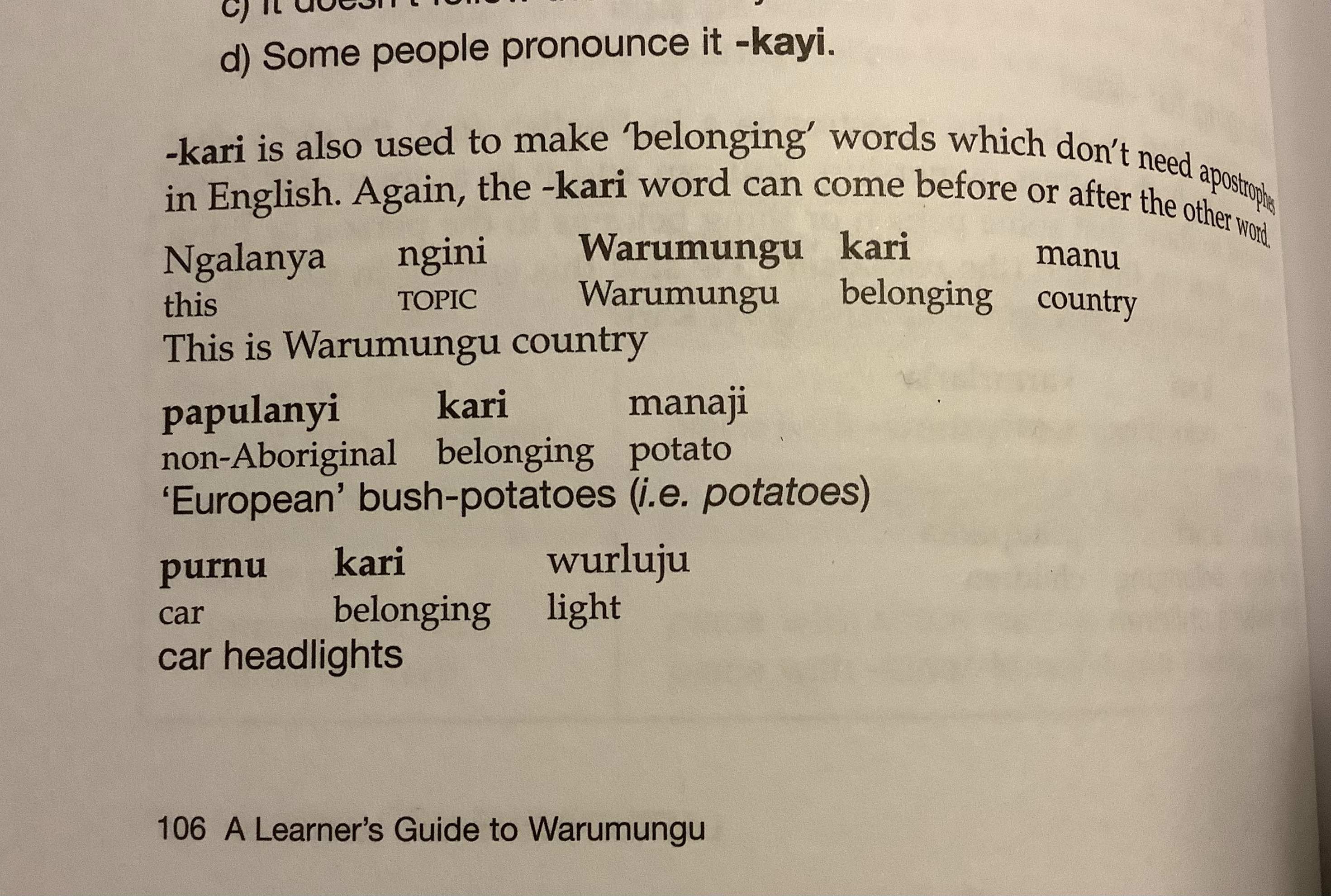
My limited understanding of Warumungu language (First Peoples – Tennant Creek Barkly region, NT) gives:
manu-kari for country-having
manu-kupurtu for country-lacking
We will need to ask Warumungu people if they agree to use these terms in a general sense.
Solutions will emerge as we proceed … discussion on the Sahul Perspectives Facebook Group.
 People & Society